In 2025, the Central African Republic Field Epidemiology Training Program (FETP CAR) achieved notable advancements in strengthening epidemiologist training, enhancing surveillance data quality, and fostering a One Health approach to public health.
The country grew from 24 in 2024 to 43 field epidemiologists for seven million inhabitants in May 2025. According to the International Health Regulations (IHR) standards, with a population of seven million and nearly 8,000,000 head of cattle, the CAR would need a minimum of 35 human health epidemiologists and 12 animal and environmental health epidemiologists.
The country also registered improved epidemiologist coverage at the operational level. While in 2024, all advanced level epidemiologists resided in Bangui, the capital, and worked at the central level and specialized services, in 2025, the national FETP CAR program trained epidemiologists in eight districts in the interior of the country.
This, according to the program’s annual brief, improves the coverage of qualified personnel at the operational level and therefore improves the responsiveness of interventions in the event of a public health emergency.
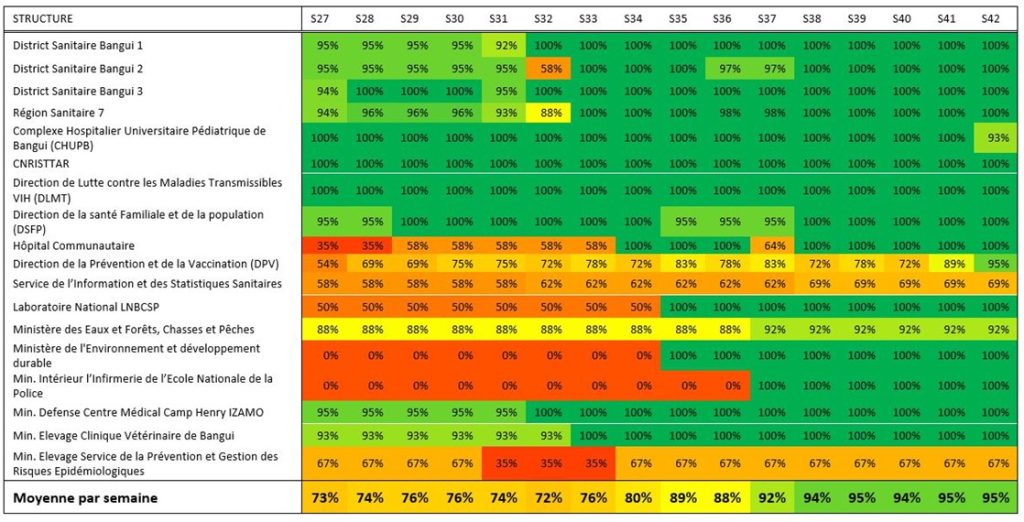
In terms of improved timeliness of surveillance data, the country saw an upward trend from 72% to 95% in FETP learner services, extracted from 27th to 42nd epidemiological weeks.
Regarding improving the One Health approach, modules of the epidemiological surveillance courses were divided into One health modules. Similarly, of the 44 FETP frontline graduates, 5 (11%) were from animal health, 6 (14%) from Water, forestry, hunting and fishing animal health, 7 (16%) were from the environmental sector.
AFENET