Strengthening Sierra Leone’s health security through FETP light
-
by
AFENET
In Eastern Sierra Leone—where communities remain vulnerable to various epidemic-prone diseases like viral hemorrhagic fever—early detection is crucial for saving lives and protecting communities. Kenema and Kailahun districts are at a critical point for national and regional health security, where delays in reporting can quickly lead to outbreaks of both national and international concern. For Sierra Leone’s surveillance system to serve as an effective early warning tool, it must be supported by trained frontline health workers who can transform routine data into timely public health responses.
To strengthen this frontline defence, the National Public Health Agency (NPHA), through the Ministry of Health, with technical and financial support from the US CDC, AFENET, and the Pandemic Fund Project, implemented the Field Epidemiology Training Program (FETP-Light)—a six-week, in-service program designed to build practical epidemiology skills among chiefdom and facility-level surveillance officers.
Early warning and disease surveillance depend not only on reporting tools and data infrastructure but also on people—health workers, chiefdom supervisors, and surveillance officers—who can collect, analyse, interpret, and use data to guide decision-making. However, district surveillance systems often face ongoing gaps in applied epidemiological skills, particularly in data quality improvement, analysis, feedback mechanisms, and outbreak investigation.
FETP-Light was piloted and introduced in 2023, during which 80 public health officers serving as chiefdom-level surveillance officers were trained in four districts—Moyamba, Bo, Tonkolili, and Pujehun.
From November 24, 2025, to January 16, 2026, this course was conducted in Kenema and Kailahun districts to directly address disease surveillance gaps by focusing on chiefdom supervisors, who are strategically positioned to support disease surveillance activities at both the facility and community levels.
Learning by doing surveillance strengthening in real time
Like other FETP tiers, this FETP-Light was delivered using an applied “learn-and-work” model. Beginning December 1, 2025, after their in-class workshop, participants immediately translated classroom lessons into field-based deliverables in their assigned chiefdoms. Their work directly strengthened routine surveillance functions through:
- Weekly Integrated Diseases Surveillance and Response (IDSR) summaries
- Data Quality Audits (DQA) focusing on confirmed malaria data within IDSR reporting
- Chiefdom-level heads-of-facility feedback meetings to improve reporting performance and action
- Optional case investigations to strengthen outbreak readiness and response skills
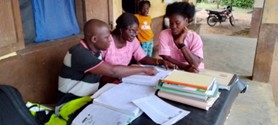
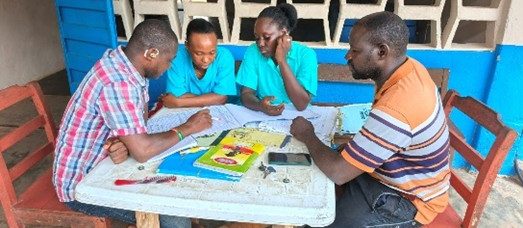
This approach ensured that surveillance improvement happened during training, not after it—accelerating benefits for the health system.
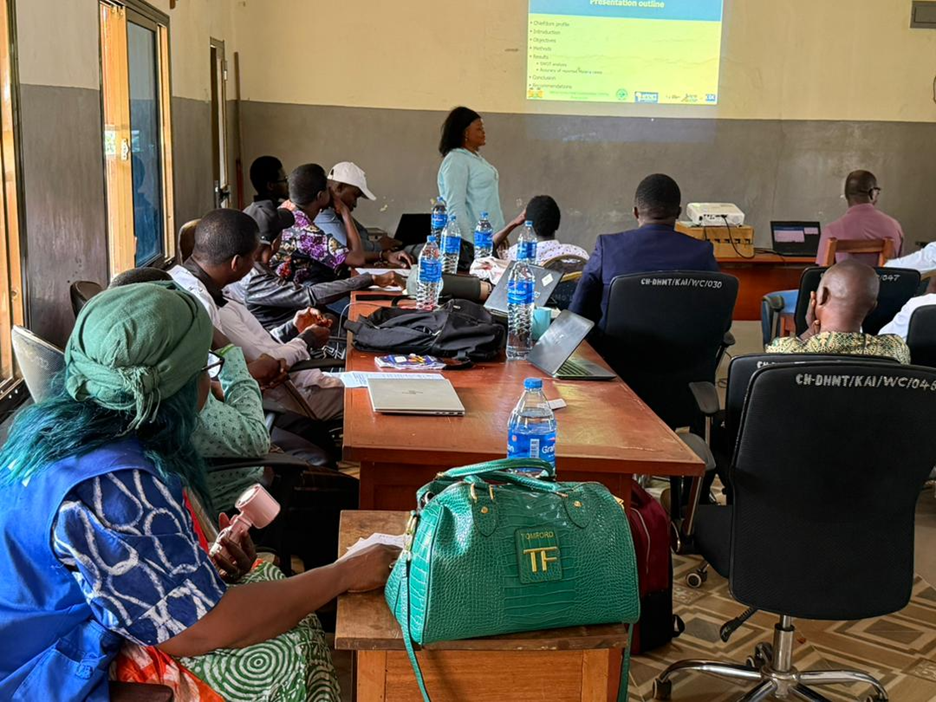
Workshop Two in each district provided a structured platform for participants to present field findings, receive mentoring and technical critique, and validate their competency for certification.
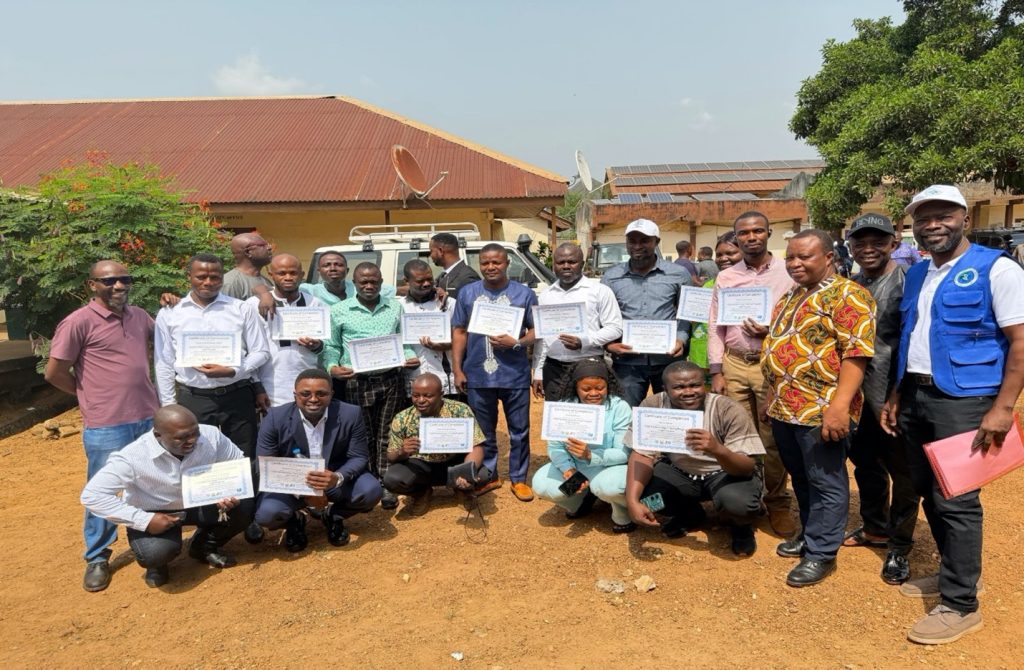
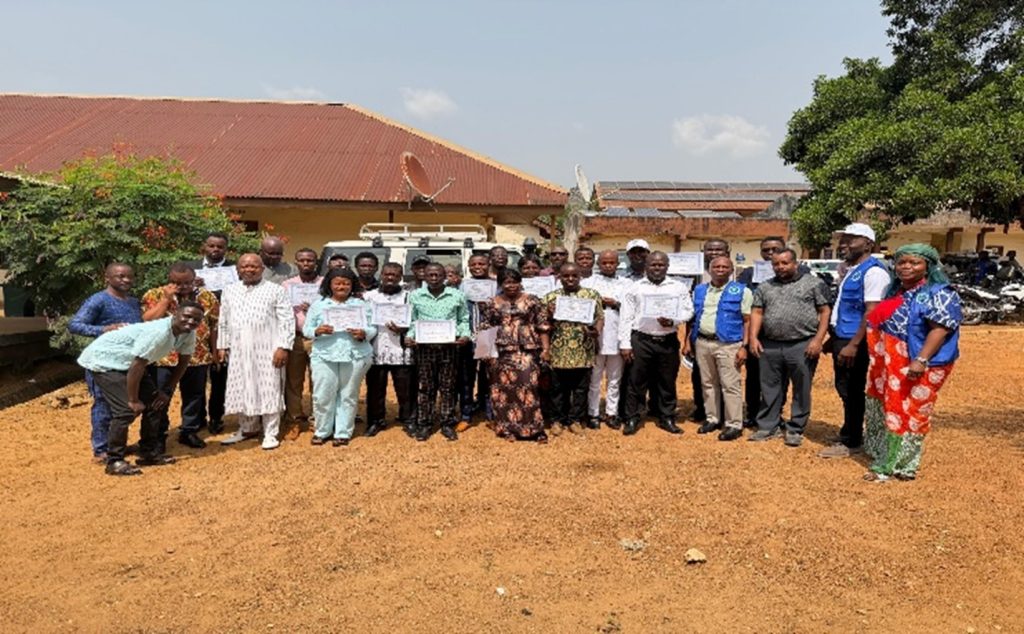
- Kenema District (Cohort 5): Workshop Two held January 11–14, 2026; 20 participants graduated January 15, 2026, representing all 16 chiefdoms.
- Kailahun District (Cohort 6): Workshop Two held January 13–15, 2026; 15 participants graduated January 16, 2026, representing 11 chiefdoms.
In total, 35 frontline health workers (clinical health officers) graduated from this six weeks FETP light, achieving 100% attendance across workshop and graduation activities—demonstrating exceptional engagement, ownership, and commitment to improving public health surveillance.
Results and impact: strengthening early warning and readiness
This combined implementation marked a significant expansion of the epidemiology capacity in Eastern Sierra Leone and a measurable step forward in national health security:
✅ 35 trained chiefdom supervisors deployed for action (20 in Kenema, 15 in Kailahun), actively supporting surveillance improvement within their assigned areas.
✅ Improved surveillance coverage and supervision, with trainees representing 16 chiefdoms in Kenema and 11 chiefdoms in Kailahun.
✅ A national workforce milestone achieved, with Kenema and Kailahun’s graduation bringing cumulative FETP-Light graduates in Sierra Leone to 100, and Kailahun expanding the national total further to 115.
✅ Stronger data quality and use through routine DQA, improved reporting accountability, and feedback loops between chiefdom and facility teams.
Beyond numbers, the most important impact was the shift in practice: chiefdom supervisors gained the ability to detect inconsistencies, correct reporting gaps, interpret trends, and trigger early public health action before threats escalate.
Impact of the training for global health security
FETP-Light directly strengthens Sierra Leone’s ability to prevent, detect, and respond to health threats—core pillars of Global Health Security. By equipping chiefdom supervisors with applied epidemiology skills, the program improved routine IDSR performance, reinforced data quality, and strengthened early warning through real-time surveillance monitoring.
This builds a stronger foundation for:
- Faster identification of unusual health events and disease spikes
- More accurate surveillance data for decision-making
- Improved readiness for outbreak investigation and response
- Stronger supportive supervision and feedback systems across health facilities
- More resilient district-level surveillance systems capable of meeting national and international reporting expectations
In settings like Kenema and Kailahun, where infectious disease risks remain high, these gains represent a critical investment in preventing localized outbreaks from spreading.
Government ownership and recognition
The graduations reflected strong national and district commitment, attended by key leaders including the Deputy Executive Director of NPHA, the Director of Applied Epidemiology and Disease Surveillance, DHMT leadership, and Sierra Leone FETP technical leadership. Their presence reinforced national ownership and the priority placed on workforce development as a pillar of health security.
The Deputy Executive Director of NPHA, Dr. Mohamed Vandi, noted during his keynote speech: “This FETP-Light training has improved the skills and knowledge of the graduates to support the health system in quality data management for improved response.”
Next steps: sustaining and scaling the gains
To consolidate progress and broaden impact, key recommendations include:
- Strengthening partner advocacy to expand FETP-Light so that at least one health facility staff member per district is trained
- Increasing engagement of national and district stakeholders in future workshops and graduation events to deepen ownership and coordination
- Continuing mentorship to help graduates sustain routine data analysis, DQA, and feedback mechanisms as part of district performance improvement
Graduate perspective: “I believe that we will go back to fix the gaps identified during the field interval and bring our other colleagues on board to maintain and sustain quality surveillance data in our health facilities”