Ebola Situation Update: DRC Strengthens Response as Bundibugyo Outbreak Expands
-
by
AFENET
17 July 2026 | Kampala, Uganda
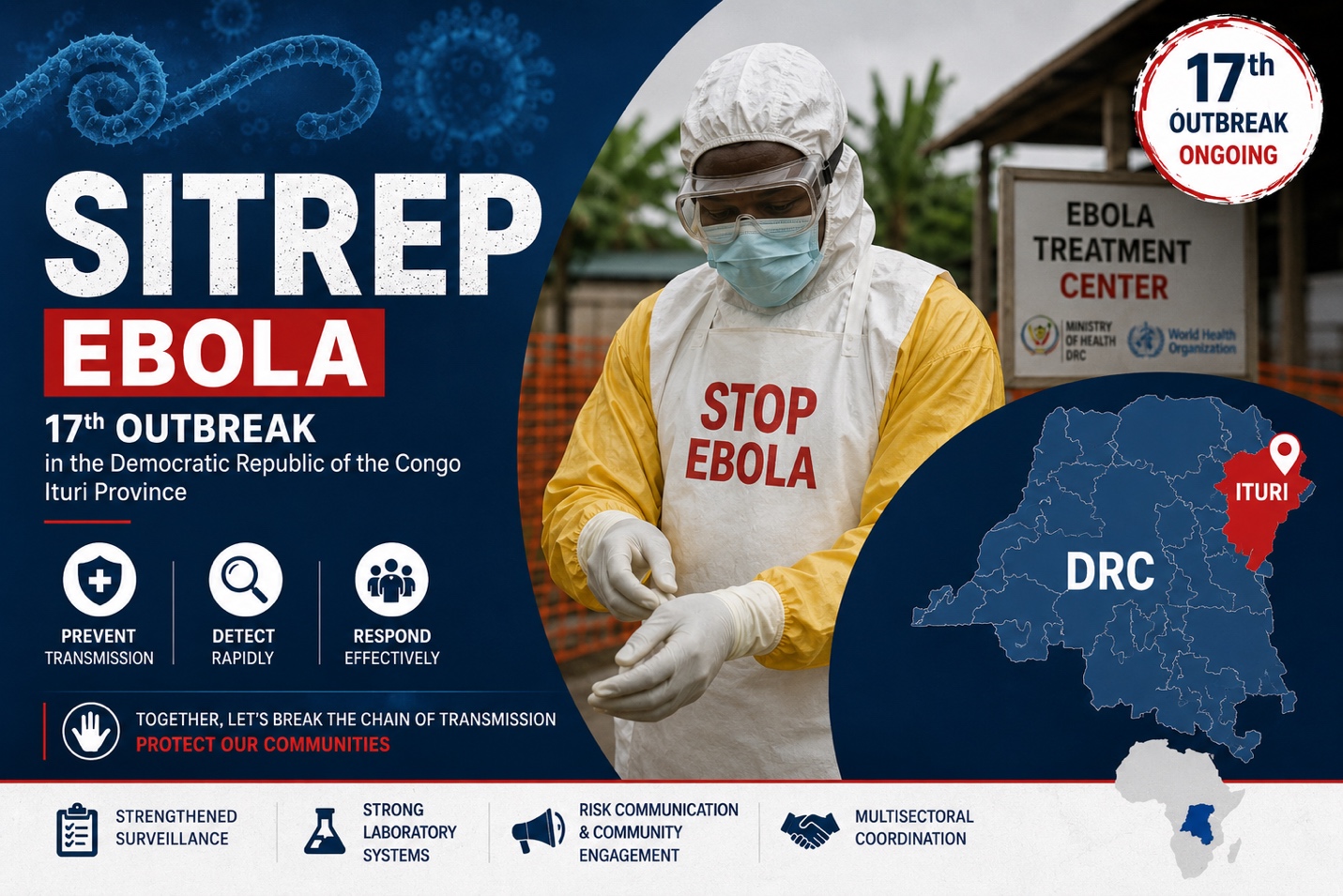
The Democratic Republic of the Congo (DRC) continues to respond to its 17th Ebola Virus Disease (EVD) outbreak, caused by the Bundibugyo ebolavirus (BDBV). While transmission remains largely concentrated in Ituri Province, the outbreak continues to expand geographically, reinforcing the need for sustained surveillance, rapid response, and strengthened cross-border preparedness.
According to the Institut National de Santé Publique (INSP) Situation Report No. 62, as of 15 July 2026, the outbreak has recorded:
- 2,124 confirmed cases
- 828 deaths (Case Fatality Rate: 39.0%)
- 390 recoveries
- 725 patients currently in isolation
- 12,693 contacts under follow-up across five affected provinces and 46 health zones
Latest Situation
During the past 24 hours, health authorities reported:
- 51 new confirmed Ebola cases
- 32 new deaths
- 13 new recoveries
The majority of the newly confirmed cases (41 cases; 80.4%) were reported in Ituri Province, while 10 cases (19.6%) were recorded in North Kivu.
A significant development is the confirmation of the first Ebola case in Mahagi Health Zone, located along the DRC–Uganda border. This development heightens the importance of coordinated cross-border surveillance, information sharing, and preparedness activities to minimize the risk of international spread.
Ituri Remains the Epicentre
Ituri Province continues to bear the greatest burden of the outbreak, accounting for 1,904 confirmed cases—approximately 90% of all reported infections—and 692 deaths. North Kivu remains the second most affected province with 199 confirmed cases.
Although surveillance and laboratory operations continue across affected provinces, response teams remain under considerable pressure as transmission persists.
Surveillance and Contact Tracing
Disease surveillance remains active, with 1,270 alerts reported and 868 investigated, representing an investigation rate of 68.3%.
Contact tracing continues to be one of the most critical interventions for interrupting transmission. However, the national follow-up rate currently stands at 80.3%, below the operational benchmark of 95% recommended for effective Ebola control. Performance gaps are particularly evident in Ituri and Tshopo, highlighting the need for additional field teams, strengthened community engagement, and sustained operational support.
Border Health Measures Continue
Given the increasing cross-border risk, health authorities continue to strengthen screening activities at points of entry and points of control.
Current border health activities include:
- 73 active Points of Entry and Points of Control
- 151,585 travellers screened
- 96% screening coverage
- 97% hand hygiene compliance
- 98.2% health education coverage
- 12 public health alerts detected through border screening
These measures remain essential for early detection of suspected cases and reducing the risk of cross-border transmission.
Why This Matters
The ongoing outbreak demonstrates the importance of investing in strong public health systems before emergencies occur. Effective Ebola control depends on timely case detection, skilled field epidemiologists, efficient laboratory networks, rapid contact tracing, infection prevention and control (IPC), risk communication and community engagement (RCCE), and coordinated cross-border collaboration.
AFENET continues to support Ministries of Health, National Public Health Institutes, and partners across Africa by strengthening these core public health capacities through workforce development, surveillance, emergency preparedness, laboratory strengthening, and outbreak response support.
As the situation evolves, sustained investments in public health systems and regional collaboration remain essential to containing the outbreak and protecting communities across the region.
Source: Institut National de Santé Publique (INSP), Democratic Republic of the Congo. Ebola Situation Report No. 62 (15 July 2026).