AFENET adapts maternal and newborn health surveillance to FETP training to build capacity for eliminating preventable deaths in Senegal
-
by
AFENET
For a long time, Senegal, an AFENET member country was plagued with inadequate neonatal death audits; absence of stillbirths & “beautiful escapes” audits; long delays in notification of deaths and deficiencies in death investigations. These challenges were identified as the main gaps in Maternal and Perinatal Death Surveillance & Response (MRDS), which is a recognized strategy to accelerate the rate of decline in deaths and eliminate preventable maternal and newborn deaths.
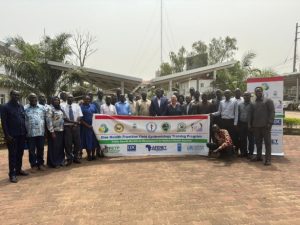
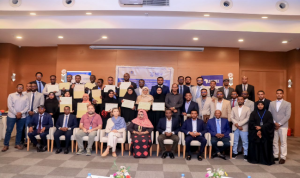
In 2023, AFENET, working in partnership with the U.S. CDC, the Bufett Foundation, and the Senegal Ministry of Health, adapted maternal and newborn health surveillance to the FETP curriculum, with the objective of training public health professionals in applied epidemiology and integrated disease surveillance and responses adapted to maternal and child health. A total of 97 FETP residents were initially trained to conduct maternal and neonatal death audits. During 2024, additional cohorts of residents were recruited and trained, comprising reproductive health coordinators, hospital midwives and paediatric department supervisors. More 111 residents were trained (bringing the total to 208 trainees) of which, 87% came from the district level including hospitals and 13% from the regional directorates. Post-training follow-up and support supervision were carried out in the field to enhance knowledge gain.

With the knowledge and skills gained from the training, there is evidence based on post-training follow-up reports that health workers have seen improvements in the following areas: Improvement of work organization (revival of audit committees, implementation of standard tools and systematic filling in of notification forms, strengthening collaboration in maternity teams, data archiving, tool classification, and data verification); improved monitoring (due to improved mastery of the case definitions there is increased, prompt, and systematic notification of suspected cases of malnutrition, all deaths & still births, timely completion of the neonatal and maternal death survey, and the stillbirth audit, increased dissemination and posting of case definitions to all health posts, implementation of notification and case definition forms, posting of maternal, neonatal and stillbirth deaths, and mapping of risk areas) which was not the case prior to the training.
The enhanced investigations have led to the implementation of improved response strategies led by local leaders, based on the early use of maternity wards, improved support mechanisms including integration of stillbirth surveillance, and better patient follow-up. At AFENET, we believe that by working with our partners in the country’s health sector, these gains in skills and improvements in Maternal and Newborn Health Surveillance will ultimately lead to preventable Maternal and Neonatal Deaths being eliminated in Senegal.