AFENET drives vaccination activities to reduce zero-dose children in Nigeria
-
by
AFENET
With technical and financial support from the United States Centers for Disease Control and Prevention (CDC), AFENET is implementing the Consequential Geography (CG) Project in Nigeria and Ethiopia. The project aims to strengthen routine immunization (RI), increase vaccine coverage, reduce the number of zero-dose and under-immunized children, and enhance surveillance for vaccine-preventable diseases (VPDs). In Nigeria, Zamfara state is tagged as one of the “consequential geographies” that contribute significantly to frequent VPD outbreaks due to low RI coverage and poor child health indices.
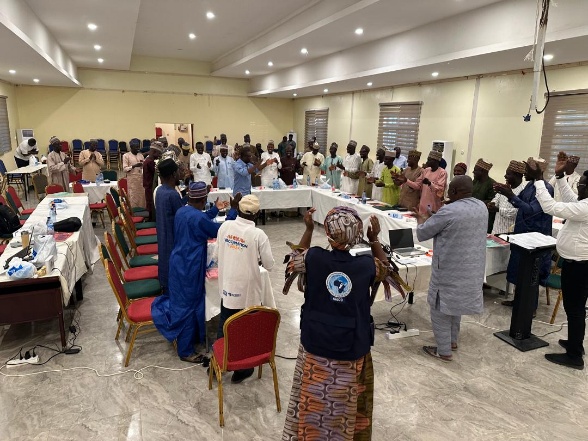
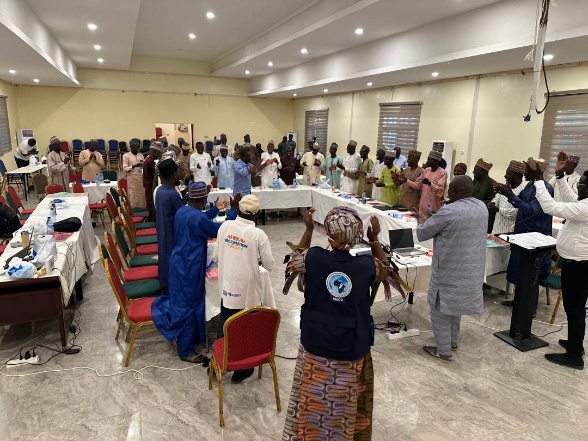
To achieve the project objectives, a key strategy utilized by the project team in Nigeria is the Identify, Enumerate, and Vaccinate (IEV) strategy. This is a community-driven engagement approach that works by enlisting traditional rulers and community leaders as vital influencers to increase demand for immunization and encourage compliance with health interventions. Through this approach, health workers are deployed to beneficiary communities to actively identify, enumerate, vaccinate, and link zero-dose and under-immunized children to the health facilities for follow up vaccination. This targeted intervention has significantly improved community ownership, participation, and vaccine uptake in Zamfara State.
To-date, the key achievements of the project include the following:
- Over 1800 healthcare workers across the LGAs in the state equipped to implement the IEV strategy and facilitate linkages of under 2 years’ children to RI services
- Over 20% reduction in the number of zero dose children in the targeted LGAs, through routine defaulter tracking and linkage using ward level personnel with the support of influential persons to ensure continuity while sustaining vaccinations amongst the line listed children
- A remarkable 90% vaccination coverage among the identified and enumerated zero-dose and under immunized children
- Strengthened immunization data quality with improved data quality indicators, following capacity building of health workers using an online self-paced learning application on data quality improvement
- Fostered community awareness, involvement, and ownership of RI services and community based surveillance for VPDs through regular community engagement and sensitization meetings
- Robust participation of traditional, religious leaders and other influential persons in demand generation activities and building community trust in immunization services.
With routine immunization being the cornerstone of most public health interventions, safeguarding communities from vaccine-preventable diseases can only be achieved if these eligible children are vaccinated with the required antigens. By identifying and vaccinating these zero-dose and under-immunized children, AFENET NSTOP is contributing to a healthier future for the people of Zamfara State and a healthier Nigeria at large.