Cabo Verde Launches First Intermediate Field Epidemiology Training Program Praia, Cabo Verde | 3 August 2026
-
by
AFENET
Cabo Verde has launched its first Intermediate Field Epidemiology Training Program (FETP), marking an important expansion of the country’s investment in a skilled workforce for disease surveillance, outbreak investigation and public health emergency response.
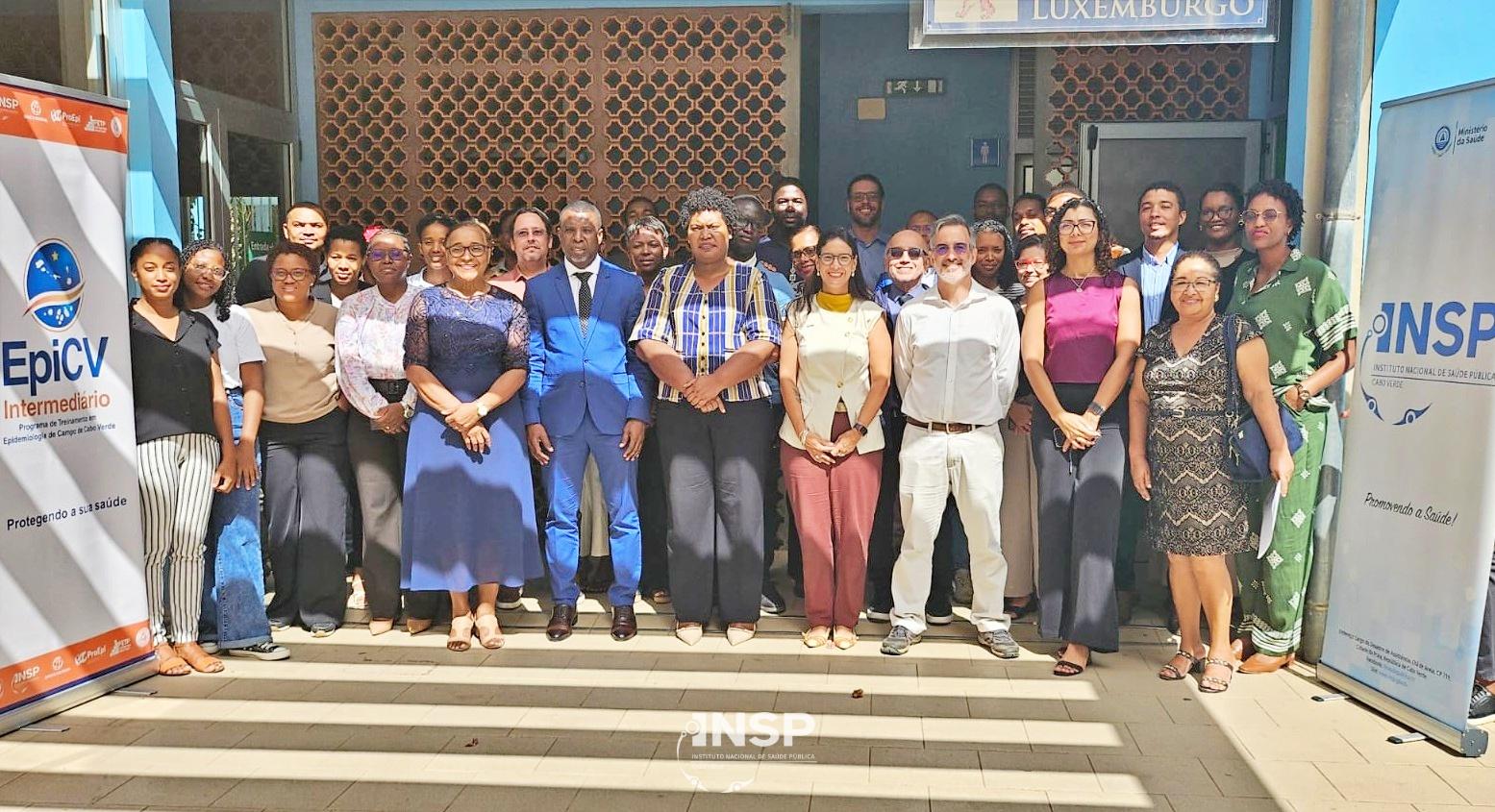
The first cohort began training in Praia on 3 August 2026 and comprises 18 health professionals who previously completed Frontline FETP. They represent five islands and several disciplines across the One Health spectrum.
The launch builds on Cabo Verde’s experience with Frontline FETP, through which more than 100 field epidemiologists across eight cohorts have been trained, with coverage across all municipalities. The move to Intermediate FETP is intended to deepen national capacity for epidemiological surveillance and emergency response.
The new cohort reflects a multidisciplinary One Health approach. It includes five doctors, five nurses, two biologists, two biomedical scientists, two veterinarians, one microbiologist and one geographer. Participants come from Santiago, Santo Antão, São Vicente, Boa Vista and Sal.
The training comes as Cabo Verde continues to strengthen preparedness following experiences with COVID-19 and dengue and amid wider regional public health threats. One component of the program will involve a seroepidemiological survey of arboviruses to help assess viral circulation and population immunity following the country’s recent dengue epidemic. Findings are expected to support surveillance, risk assessment and evidence-based prevention and control measures.
Speaking at the opening, Artur Veiga, Secretary of State for Health, emphasized the importance of investing in qualified human resources and the role of field epidemiologists in transforming data into knowledge, decisions and action. The program also brings together expertise from human, animal and environmental health, reinforcing Cabo Verde’s One Health approach.
The Intermediate FETP is expected to strengthen the country’s ability to detect and investigate public health threats, improve the quality and timeliness of surveillance data, strengthen rapid response teams and increase the use of epidemiological evidence in decision-making.
The initiative is supported through the Pandemic Fund for Cabo Verde, co-financed by the Government of Cabo Verde and the Health Security Project in West and Central Africa implemented by the World Bank. ProEpi is technically implementing the Intermediate FETP in partnership with the National Institute of Public Health. AFENET, CDC Atlanta, Africa CDC and the West Africa Regional Center for Disease Surveillance and Control are among the program partners listed in the submission.